 Tinyverse

A Thanksgiving social narrative for big family gatherings
Holiday gatherings bring new houses, loud rooms, unfamiliar food, hugs from relatives and a broken routine, all in one afternoon. A story read the week before, and a plan for quiet breaks, can make the day easier for everyone.
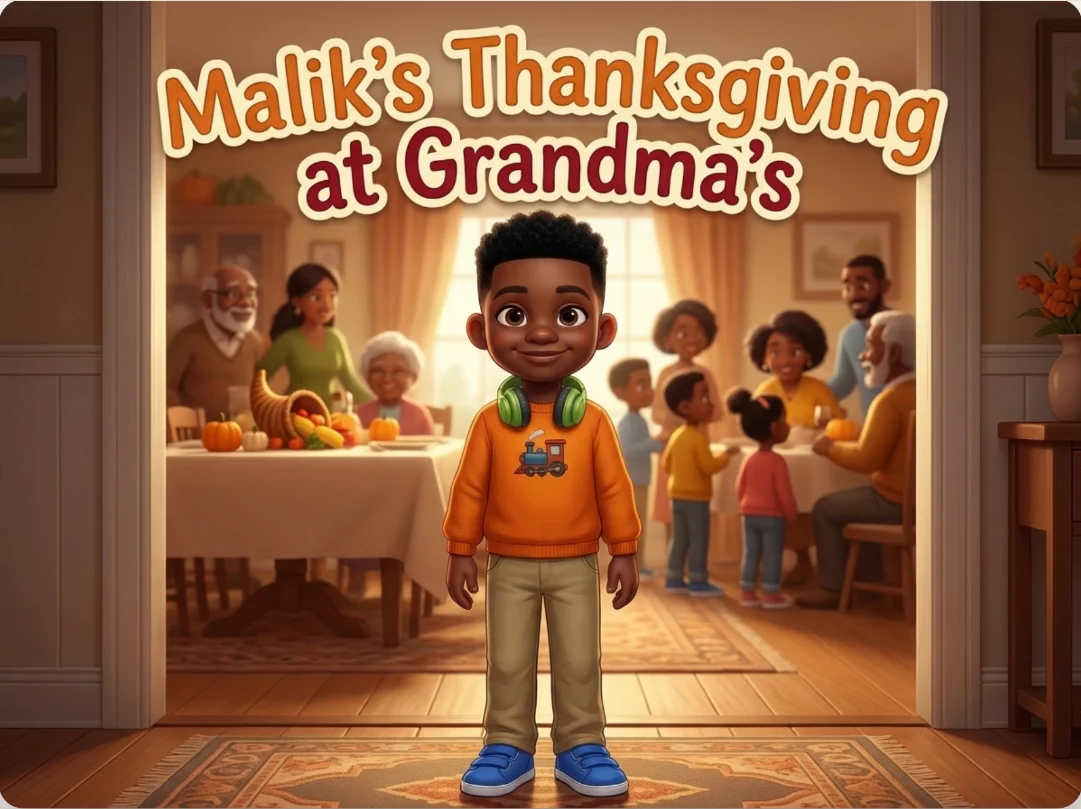
To prepare an autistic child for Thanksgiving or a holiday gathering, read a short social narrative about the day for a week beforehand, show photos of the house and the people who will be there, agree on a quiet-break plan and a signal, and let your child greet relatives in their own way. Bring familiar food and a visual schedule so the day still has a shape.
Key takeaways
- Name the people, the place and the plan in the story. Show photos if you have them.
- Agree on a quiet room and a break signal before you arrive.
- Let your child choose how to greet: wave, high five, or a quick hello. Hugs are optional.
- Bring at least one food your child will eat. Trying a new food is optional on a day like this.
- Keep a small schedule of the day so it still has a beginning, middle and end.
A sample Thanksgiving social narrative
Malik's Thanksgiving at Grandma's (real pages)
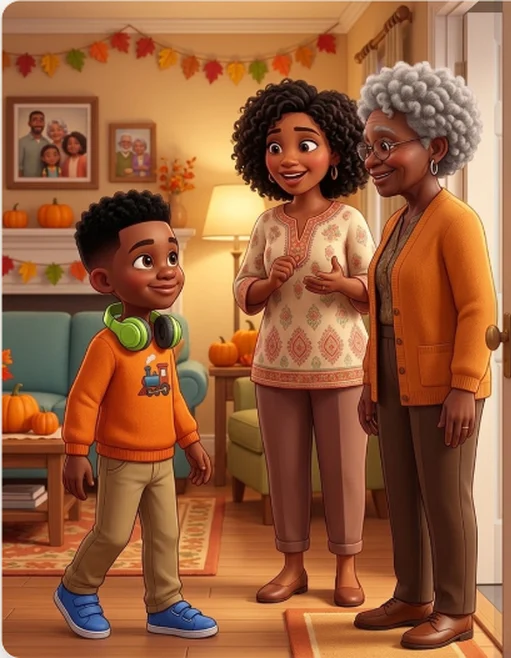
On Thanksgiving we go to Grandma's house. Lots of family will be there.
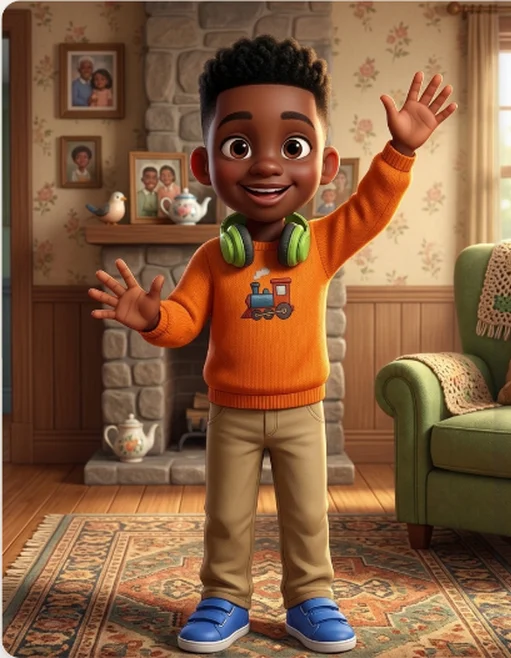
I can say hello my way. I can wave, give a high five, or say hi.
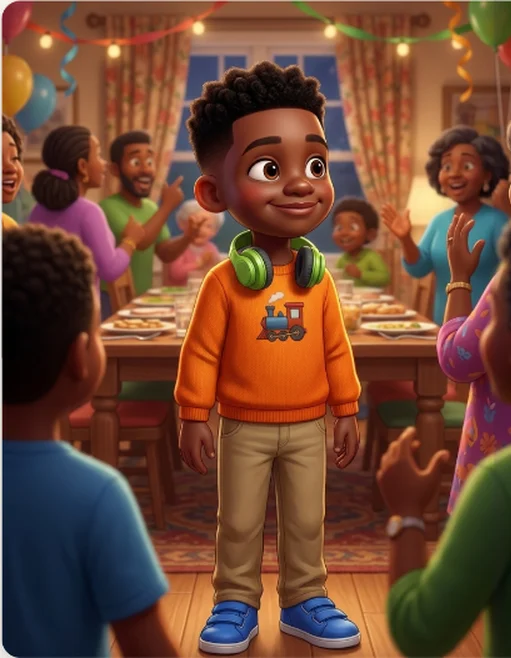
It might get loud when everyone talks at once. Loud means people are happy to be together.

If it feels too loud, I can put on my headphones and rest in the quiet room.
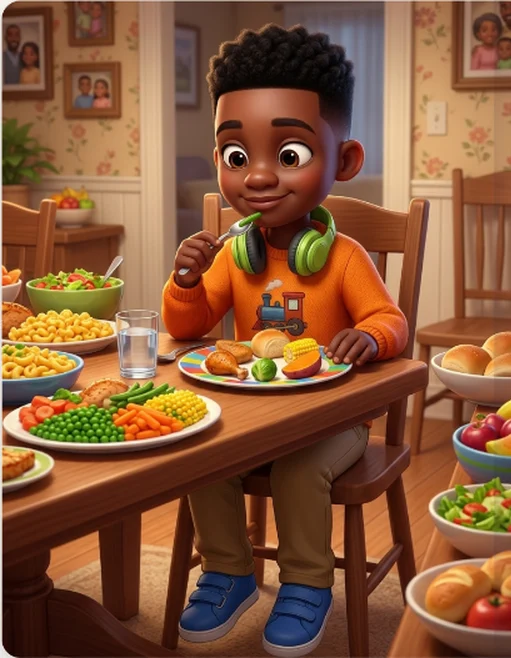
There are many foods on the table. My plate has foods I like. I can try a bite or say no thank you.
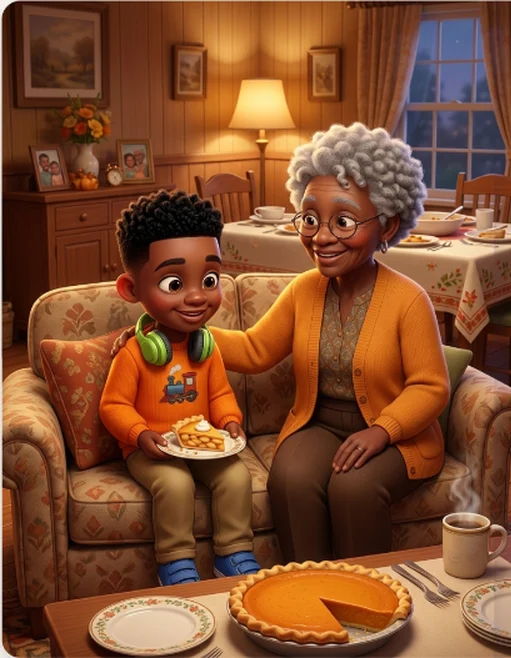
After dinner we eat pie. Grandma smiles when I sit next to her.

Thanksgiving is done and we drive home. I spent the day with my family. I feel proud of myself.
A schedule for the day
Holidays remove the usual structure. A short schedule puts some of it back.
Thanksgiving day
How to plan quiet breaks
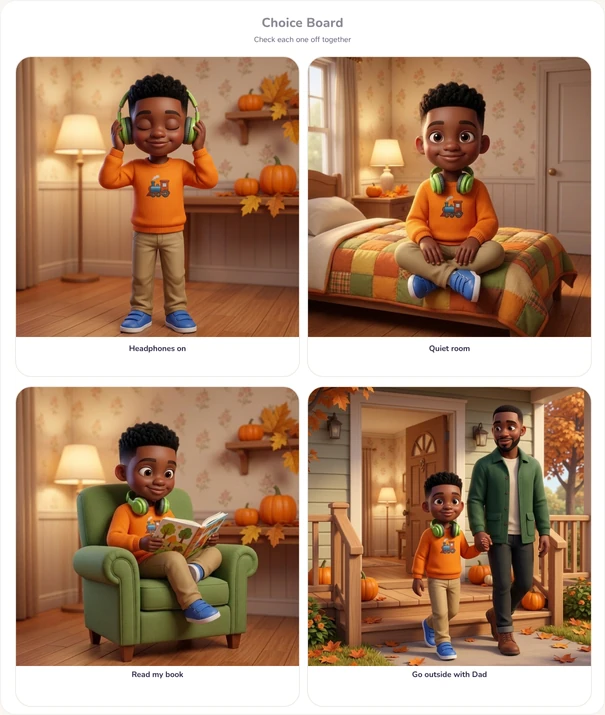
Pick the room before you go. Ask the host if a bedroom or office can stay quiet. Pack headphones, a favorite book or tablet, and a comfort item. Agree on a signal: a card your child can hand you, a word, or pointing to the choice board at the top of this page. Practice using the signal at home a few times.
A word to relatives. A short message the week before helps: "Sami may not hug or make eye contact. He is happy to see you. A wave works great." Most relatives are glad to know.
What about the food?
Thanksgiving is built around a big shared meal, which can be a lot for a child with a narrow list of safe foods. Bring one or two foods your child reliably eats, and treat any new food as optional. If you are working on new foods at home, our trying new foods guide has a gentle step-by-step approach.
Your first story is free
Upload one photo, describe the moment your child is working through, and get an illustrated social narrative with your child as the hero in about 2 minutes.
Every family's holiday looks different
The sample above is Thanksgiving at Grandma's. Yours might be Diwali at an uncle's, a Friendsgiving, a church dinner or a holiday spent between two homes. The structure stays the same. What changes is the place, the people, the food and the traditions, and those details are what help your child recognize the story as theirs. That is a big part of why we built Tinyverse to illustrate each child, their family and their own celebrations.
Questions parents and teachers ask
How do I prepare my autistic child for Thanksgiving?
Read a short social narrative about the day for a week before, show photos of the people and the house, plan quiet breaks with a signal, bring familiar food and a simple schedule.
Should I make my child hug relatives?
No. Let your child choose a greeting. A wave or high five is a complete hello, and telling relatives ahead of time helps.
What if we have to leave early?
That is a fine plan. Build "we might leave early" into the story so it does not feel like a failure.
Can I use the same story for Christmas or other holidays?
Yes. Keep the structure and change the place, people, food and traditions.

Your first story is free
Upload one photo, describe the moment your child is working through, and get an illustrated social narrative with your child as the hero in about 2 minutes.
Work in a school or clinic? Request a school pilot or get a clinic quote.
How this was made: written by Dilip Jagadeesh with AI drafting help, then checked against the sources linked in the article. The illustrations are real Tinyverse output or mockups of Tinyverse visual supports. Nothing here is medical advice; talk with your child's care team about what fits your child.